
Conditions We Treat
Cavities and Decay
What causes cavities, how to spot them early, and how GN Dental treats tooth decay at every stage.
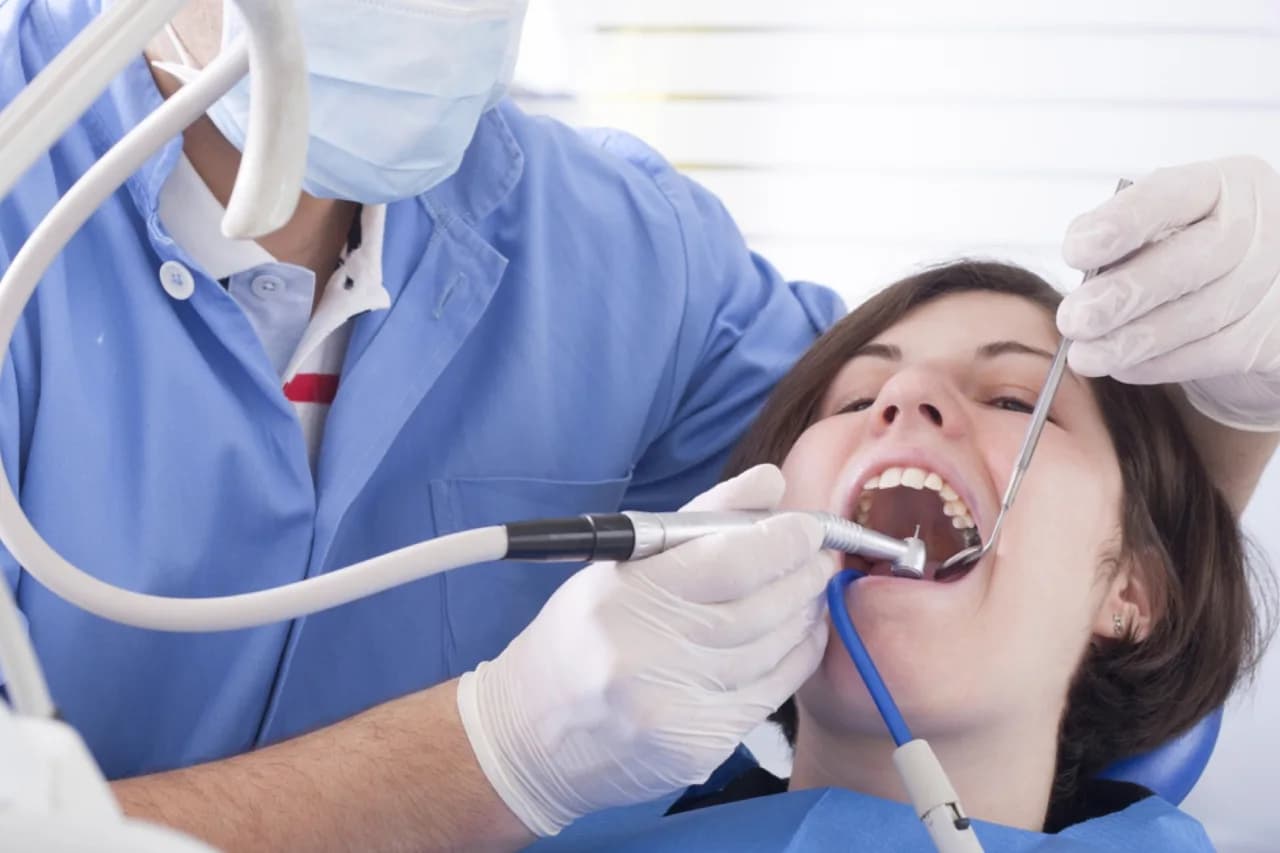
A cavity is a small hole or area of permanent damage in the hard surface of a tooth, caused by decay. Tooth decay happens gradually, when bacteria in your mouth feed on sugars and starches left behind after eating, producing acid that slowly wears away tooth enamel. Left alone, this process continues below the surface, eventually reaching the softer layers of the tooth and, if untreated long enough, the nerve at its center.
Cavities are one of the most common dental problems in the world, affecting people of every age, from young children getting their first teeth to adults who have had healthy teeth for decades. Because early decay does not always cause pain, many people do not realize they have a cavity until it has grown large enough to be visible or uncomfortable. This is exactly why routine dental checkups matter so much, since a dentist can spot a cavity on an X-ray or during an exam long before it becomes a problem you can feel.
Cavities can form on any part of a tooth, but they are most common on the chewing surfaces of back teeth, where deep grooves trap food and bacteria, and between teeth, where a toothbrush cannot easily reach. Cavities can also form along the gum line or on the roots of teeth, particularly in adults whose gums have receded and exposed root surfaces that were never meant to be exposed to the bacteria and acid found above the gum line.
The good news is that cavities are both preventable and, in almost every case, very treatable. At GN Dental in Yuba City, we see patients at every stage of tooth decay, from a tiny spot caught early to a deeper cavity that has already started causing discomfort. Whatever stage yours is at, our goal is always the same: stop the decay, restore the tooth, and help you avoid a repeat of the problem down the road.
This page walks through what causes cavities, the signs to watch for, who is most at risk, and exactly how we treat tooth decay at our Yuba City office, so you know what to expect whether you are due for a routine checkup or already dealing with a toothache. If you recognize any of the symptoms described below, the most important step is simply getting an exam rather than waiting to see whether the discomfort passes on its own.
Common Symptoms
Cavities do not always hurt, especially in their early stages, which is part of what makes them tricky to catch on your own. As decay progresses, though, most people start to notice one or more of the following signs. If any of these sound familiar, it is worth scheduling an exam rather than waiting to see if it goes away on its own.
- A visible dark spot, brown stain, or small hole on a tooth
- Sensitivity to hot, cold, or sweet foods and drinks
- A dull ache or sharp pain when biting down
- Pain that comes and goes without an obvious trigger
- A rough spot on a tooth that you can feel with your tongue
- Food that seems to get stuck in the same spot repeatedly
- Visible pits or grooves on the chewing surface of a tooth
- Bad breath or an unpleasant taste that does not go away with brushing
Cavities at Different Ages
Cavities look a little different depending on age. In children, decay often forms in the deep grooves of the back molars, where food and bacteria collect easily and where brushing technique is still developing. Baby teeth also have thinner enamel than adult teeth, so decay can progress more quickly if it is not caught early, which is one reason we recommend starting checkups by a child's first birthday.
In adults, new cavities often appear between teeth or around the edges of old fillings and crowns, spots that are easy to miss without X-rays. Older adults face an additional risk, since gum recession can expose the root surface of a tooth, which is softer than enamel and more vulnerable to decay. Dry mouth, often a side effect of common medications, also becomes more common with age and further increases cavity risk in this group.
Stages of Tooth Decay
Tooth decay develops in stages, and understanding where a cavity falls on this spectrum helps explain why treatment can range from a simple filling to a root canal. The earliest stage is a white spot lesion, a small area where minerals have started to be lost from the enamel. At this stage, there is no hole yet, and with fluoride treatment and improved home care, this early damage can sometimes be reversed before it ever becomes a true cavity.
If the process continues, the enamel eventually breaks down enough to form an actual cavity, a small hole in the tooth's outer layer. This stage often has no symptoms at all, which is why it is usually caught on a routine X-ray rather than because a patient notices anything. Left untreated, decay then reaches the dentin, the softer layer beneath the enamel, where it spreads more quickly and often starts to cause noticeable sensitivity or mild discomfort.
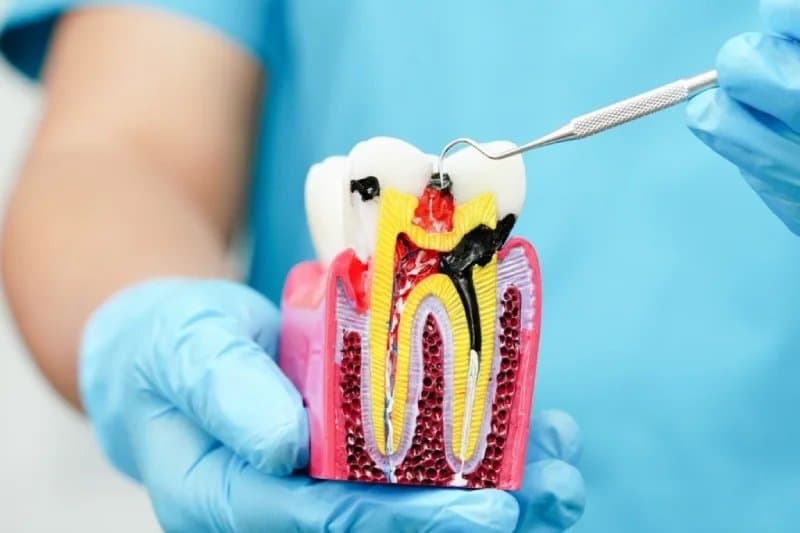
Once decay reaches the pulp, the innermost layer of the tooth containing its nerve and blood supply, pain typically becomes much more obvious, often described as a persistent ache or sharp pain when biting down. At this stage, a simple filling is no longer enough, and root canal therapy is usually needed to remove the infected tissue and save the tooth. If an infected tooth is left untreated even longer, the infection can spread beyond the tooth itself, forming a painful abscess that may require more urgent care.
Causes and Risk Factors
Tooth decay is caused by acid-producing bacteria that live naturally in everyone's mouth. When you eat or drink something containing sugar or starch, these bacteria break it down and produce acid as a byproduct. That acid attacks the minerals in your enamel, and over time, repeated acid attacks without enough recovery time in between will wear a hole through the enamel and into the tooth underneath.
While anyone can get a cavity, certain habits and conditions make decay more likely to develop and progress faster. Understanding your own risk factors can help you and our team decide how often you need checkups, X-rays, and preventive treatments like sealants or fluoride.
Diet plays one of the biggest roles in cavity risk, since frequent exposure to sugar and starch gives the bacteria in your mouth more opportunities to produce acid throughout the day. Sipping sugary drinks slowly over a long period, for example, can actually be worse for your teeth than drinking the same amount quickly, since it keeps your mouth in an acidic state for longer. Saliva also plays an important protective role, since it naturally neutralizes acid and washes away food particles, which is why conditions or medications that cause dry mouth tend to increase cavity risk significantly.
- Frequent snacking or sipping sugary or acidic drinks throughout the day
- Inconsistent brushing and flossing, or brushing technique that misses key spots
- Dry mouth, which reduces the saliva that naturally rinses away bacteria and acid
- Deep grooves or pits in the chewing surfaces of back teeth
- Old fillings or crowns with worn edges where bacteria can collect
- A diet high in refined carbohydrates and added sugar
- Not getting enough fluoride, whether from water, toothpaste, or professional treatments
- Age, since both young children and older adults face higher cavity risk for different reasons
Catching Decay Before It Spreads
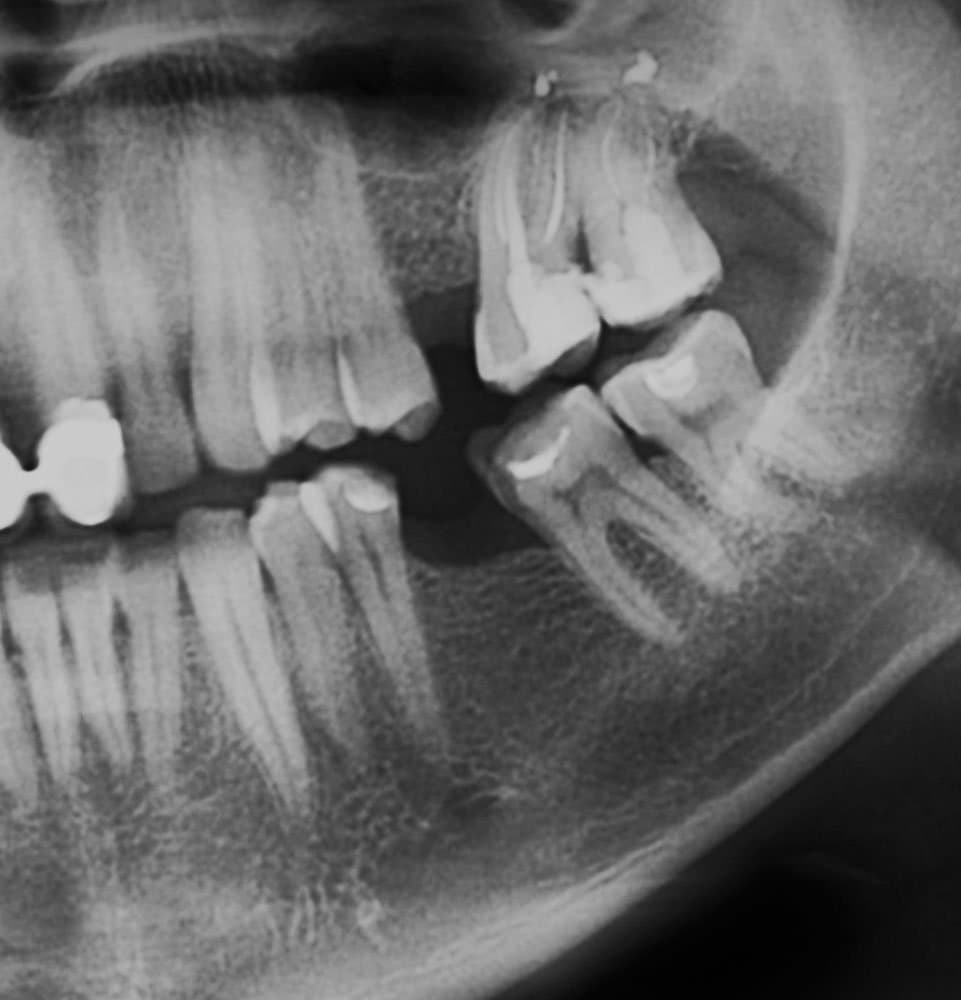
Many cavities are invisible to the naked eye in their earliest stages, which is why digital X-rays are such an important part of a routine checkup. X-rays let us see decay forming between teeth or beneath old fillings long before it would show up as a visible spot or cause any pain.
The earlier we catch a cavity, the more conservative the treatment can be. A cavity caught early might only need a small filling, while one that has been left untreated for months or years may require a root canal or even extraction. Regular checkups are what make that early detection possible, which is why we recommend most patients keep to a six-month schedule even when nothing seems to be wrong.
How We Treat Cavities
Treatment for a cavity depends entirely on how far the decay has progressed. Our approach is always to choose the most conservative option that will fully resolve the problem, rather than defaulting to the most involved procedure. Here is how that typically breaks down at GN Dental.
Available Treatments at GN Dental
For most cavities, we remove the decayed portion of the tooth and restore it with a tooth-colored composite filling in a single visit.
Routine exams and X-rays let us catch new cavities early and monitor any areas we are watching closely.
When decay has reached the nerve of the tooth, root canal therapy removes the infection and saves the natural tooth.
For a tooth with extensive decay or a large old filling, a crown rebuilds its strength and shape.
Why Early Treatment Matters
A cavity does not stay the same size. Left untreated, decay continues to spread deeper into the tooth and can eventually reach the pulp, the soft tissue at the center of the tooth that contains its nerve and blood supply. Once decay reaches this point, a simple filling is no longer enough, and the tooth will likely need root canal therapy to remove the infection and save it.
If decay is allowed to progress even further, or if an infected tooth is left completely untreated, the infection can spread beyond the tooth itself, leading to an abscess, swelling, and in rare but serious cases, infection that spreads to other parts of the body. At that stage, extraction may be the only option, which means losing the natural tooth entirely and needing a bridge, implant, or denture to replace it.
Beyond the health risks, waiting also tends to cost more. A small cavity treated with a simple filling is one of the most affordable dental procedures there is. The same tooth, left untreated for a year or two, may need a root canal and crown, or even an extraction and replacement, all of which cost significantly more in both time and money than addressing the problem early. Treating a cavity as soon as it is found is almost always the simpler, faster, and more affordable path.
There is also a quality-of-life factor that is easy to overlook. A toothache from an untreated cavity can affect your ability to eat comfortably, sleep through the night, and concentrate at work or school. Addressing decay promptly is not just about protecting the tooth itself, it is about protecting your day-to-day comfort and well-being, and about avoiding the kind of emergency visit that is far more stressful than a routine filling appointment ever needs to be.
Prevention Tips
While no prevention routine eliminates cavity risk entirely, the following habits make a meaningful difference for patients of every age.
Everyday Habits That Help
- Brush twice a day with fluoride toothpaste, especially before bed
- Floss daily to clean between teeth where a toothbrush cannot reach
- Limit sugary and acidic snacks and drinks, especially between meals
- Drink fluoridated water when available
- Ask about dental sealants for children's molars
- Keep up with checkups every six months so we can catch new decay early
Cavities and Decay Questions
GN Dental / Yuba City
Think You May Have a Cavity
Do not wait for a small problem to become a bigger one. Schedule an exam with GN Dental in Yuba City and let us catch and treat decay early.
Related Services
Tooth-colored, mercury-free fillings that repair cavities quickly and blend naturally with your smile.

Routine exams and cleanings that catch problems early, protect your smile, and keep small issues from becoming costly ones.
Gentle, effective root canal therapy that relieves pain and saves your natural tooth whenever possible.